Physician Features
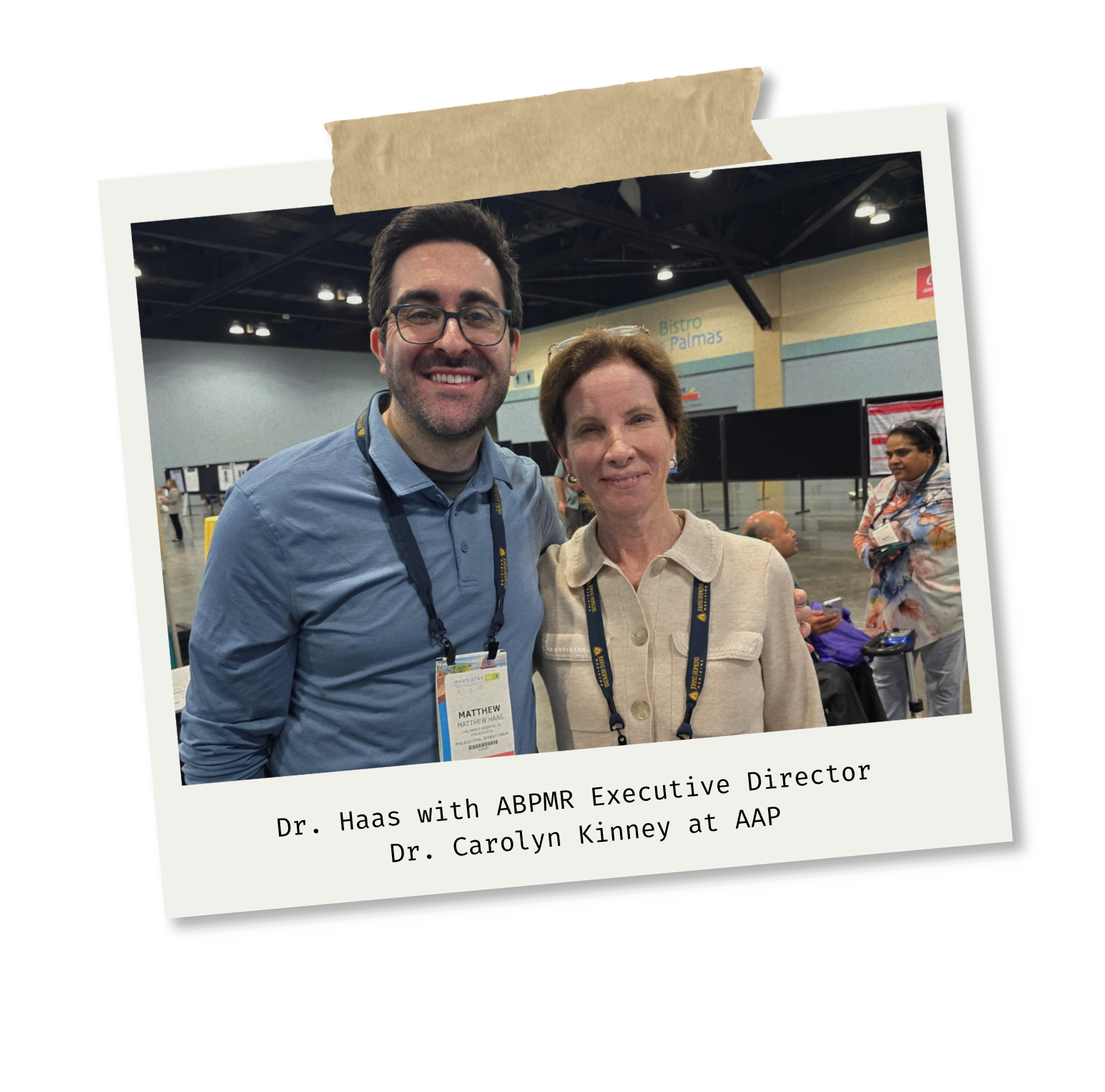
Thank you to our 2025-2026 ABMS Scholar: Dr. Matthew Haas
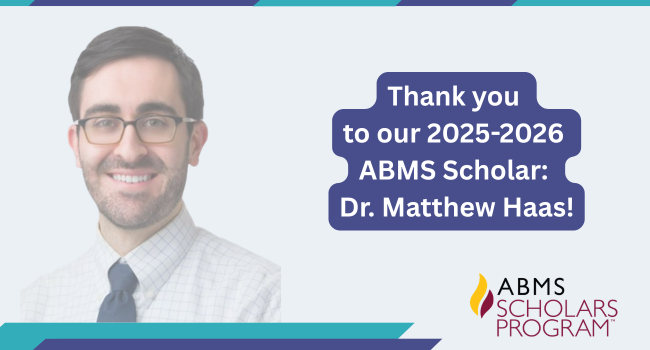
Thank you to Dr. Haas for representing ABPMR as an ABMS Scholar and for his contributions to advancing the field!
Over the past year as an ABMS Scholar, Dr. Haas has been working to better understand what influences physicians to pursue—or not pursue—a career in Pediatric Rehabilitation Medicine. His research represents the first national study to explore the motivations, experiences and barriers shaping the field’s future workforce. Dr. Haas will be presenting his research at the AAP Conference in February.
What were the conclusions of your research?
Early findings suggest that the timing of exposure to Pediatric Rehabilitation Medicine may be associated with career interest. Trainees with greater interest in PRM were more likely to have encountered the field before residency, while those without current interest more commonly had their first exposure after residency began. Respondents also identified the length of training, financial considerations, mentorship, career visibility, and personal fit as important influences on their decisions.
One finding that stood out was that some trainees felt PRM aligned with their personal values or professional identity but still did not see it as part of their long-term career plans. This may suggest that appreciating the field’s mission is not always enough to make PRM feel like a feasible or sustainable career. The findings could point toward opportunities to provide earlier, more meaningful exposure, stronger mentorship, clearer information about career options, and training pathways that better reflect the realities trainees consider when making career decisions.
How did the ABMS Scholarship help with your research?
The scholarship helped me transform a recognized workforce concern into a structured, theory-informed mixed-methods study. It provided mentorship, accountability, and a national perspective that strengthened the survey, analysis plan, recruitment strategy, and connection between the research and practical educational change.
Were there any findings, experiences, or insights that surprised you or changed your perspective on the topic?
I was surprised that concerns about training length and finances were common even among trainees already pursuing or strongly considering PRM. I was also struck by how often exposure even in those interested in PRM was described as late, brief, or dependent on chance contact with a faculty member. These findings have adjusted my focus from simply increasing exposure to considering its timing, depth, and ability to help trainees envision a sustainable career.
What is next for your research?
The next phase will involve interviews with trainees representing different exposure histories and career decisions, particularly those who remain unsure about PRM or seriously considered the field but decided not to pursue it. These interviews will help explain why similar experiences can lead to different career choices and provide a deeper understanding of how exposure, mentorship, personal fit, and structural considerations interact.
We will integrate the interview findings with the survey results to develop practical recommendations for medical schools, training programs, professional organizations, and other groups working to strengthen the PRM workforce. Our goal is to disseminate these findings in ways that support meaningful educational change rather than simply describe the workforce problem.
In parallel, we are working with the Accreditation Council for Graduate Medical Education through its AIRE program on an ABPMR-supported pilot evaluating an alternative PRM training pathway. The proposed model would reduce the overall duration of training by one year while maintaining the rigorous competencies required for PM&R and PRM subspecialty board certification. Although the research and pilot are separate initiatives, they are complementary efforts to understand and address barriers to developing the future PRM workforce.
Do you have any advice for someone thinking about applying to ABMS Scholars?
Start with a problem that matters to you and has relevance beyond your institution but keep the research question focused and feasible. Engage key stakeholders early and approach the scholarship as both a research opportunity and a chance to build mentorship, national relationships, and a broader understanding of education and certification.
Thank you, Dr. Haas!